The End of Dry January? How Mindful Drinking is Becoming the New Normal
Dry January used to be a detox. Now, it’s a lifestyle. Across bars, homes and social feeds, we’re seeing a new kind of drinker, one who still wants ritual and flavour, but without the fog. The global non-alcoholic drink segment is predicted to be worth over $2 trillion by 2030 (Food Chain Magazine, 2026), proving that mindful drinking is no longer a movement, but a market. At TMC, we’re seeing this shift come through clearly across social platforms and online communities, insights that shape the way we support brands like Savyll Beverage Co. and Hayman’s.
Mindful drinking isn’t just a phase; it’s becoming the norm.
According to The Portman Group and YouGov (Talking Retail, 2026), 86% of adults in the UK now drink within low-risk guidelines (14 units per week), or not at all. Notably, 36% of drinkers now consume low and no alcohol products semi-regularly. Whilst they remain most popular among younger adults, uptake is growing across all age groups, including those aged 55+, up by 10% from 2022.
These stats suggest a behavioural reset. It’s no longer just about giving up alcohol for January; it’s about rethinking what social drinking looks like for many people year-round. Alcohol alternatives are no longer “substitutes”, but credible choices, embraced by everyone from Gen Z socialisers to health-conscious professionals. For marketers, the takeaway isn’t just that people are drinking less; it’s that they’re expecting more from what they drink: flavour, design and relevance.
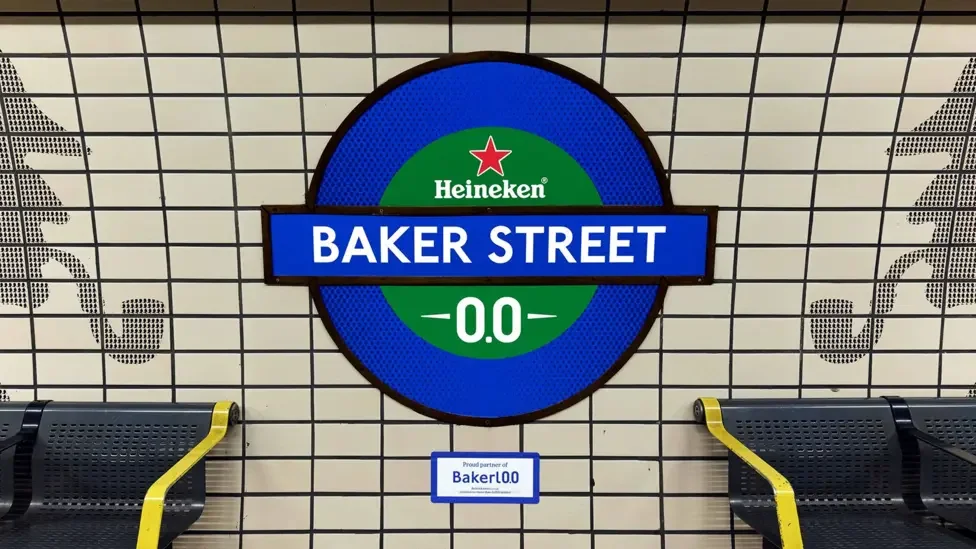
Heineken's campaign is TfL's latest commercial Tube rebranding deal
We’re also seeing this play out in the real world. Heineken’s latest campaign, promoting its zero-alcohol beer (Heineken 0.0), involved rebranding parts of the London Underground as “Bakerl0.0” and “Waterl.0.0”. This is a bold example of how big brands are normalising alcohol-free choices through mass cultural touchpoints. While it’s earned praise for creativity, the campaign has also faced backlash from disability advocates, who argue altering signage could confuse passengers who depend on familiar station signage (BBC, 2026). Beyond the controversy, it shows how mainstream players are using visibility and humour to shift perceptions from “alternative” to “everyday”. From a marketing standpoint, it’s a reminder of how powerful contextual placement can be for engaging audiences where they live, work and commute, not just during drinking occasions.
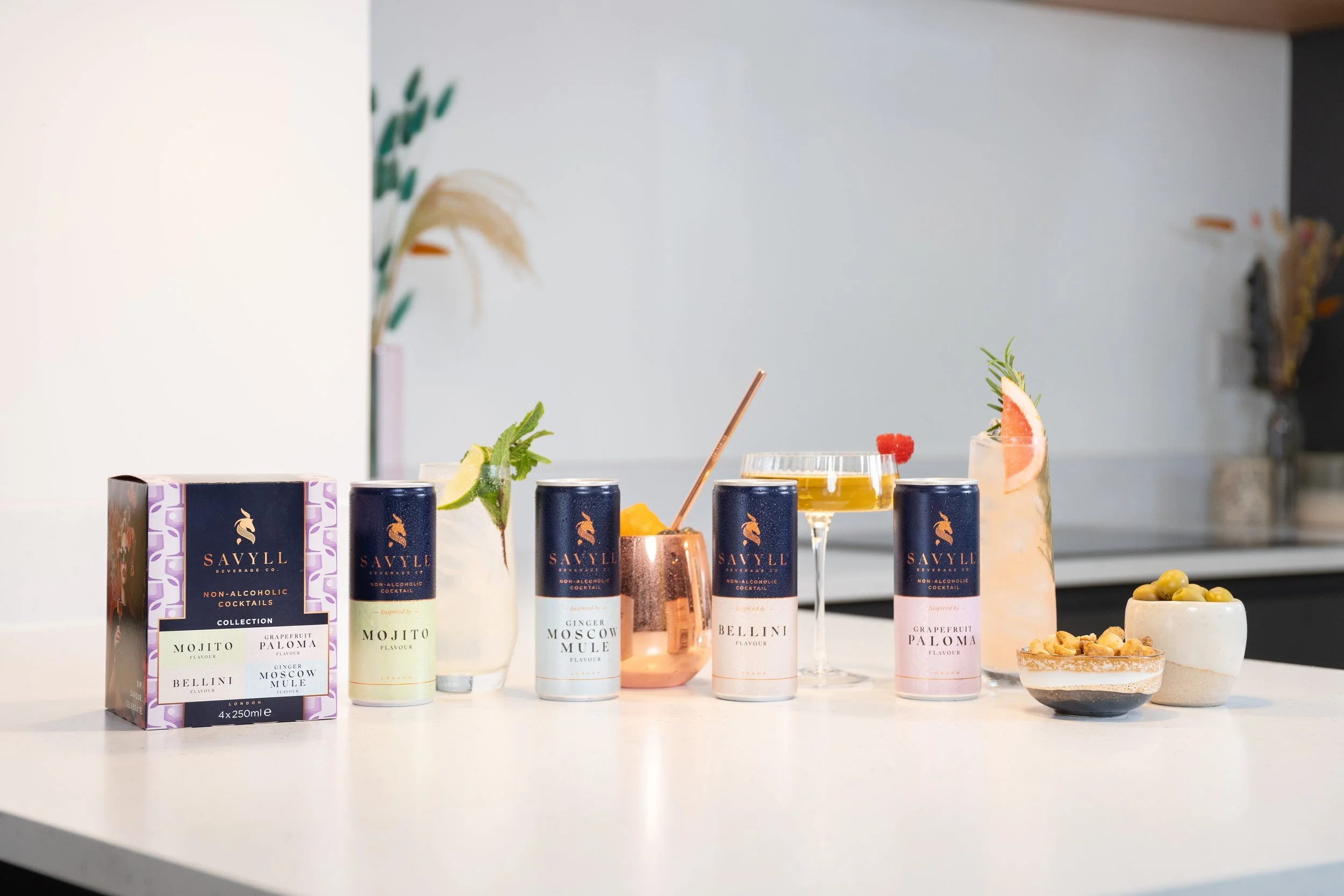
Savyll’s range of premium, ready-to-drink non-alcoholic cocktails
The rise of sober curiosity and online communities.
Sober curiosity has become part of mainstream pop culture, with TV shows and influencers reframing non-drinking as a conscious lifestyle, not a compromise (Indy100, 2026). Social platforms have been instrumental in this cultural shift, giving rise to communities like Sober Girl Society on Instagram, which offer connection, advice and support to those exploring alcohol free living. Hashtags such as #SoberLife and #NonAlcohol further amplify this movement, often paired with content around wellness, fitness and self-care, showing how digital spaces can accelerate and normalise new behaviours.
This evolving mindset sits at the heart of TMC’s work with Savyll, whose premium, ready-to-drink (RTD), non-alcoholic cocktails prove that celebration and sobriety can go hand in hand. In 2025, our partnership drove 330K page and profile impressions and a 9.48% growth in followers, fuelled by a growing movement toward flavour-first, feel-good drinking. Together, we continue to champion Savyll’s belief in “all the flavour, none of the compromise” - a mindset redefining what mindful drinking looks like.
Product innovation reflects consumer demand
Industry insights further highlight product formats as a key growth area. Research from Kingsland Drinks depicts how premium value and RTD formats, particularly canned options, are key forces in shaping the drinks market in 2026, driven by consumers’ growing appreciation of convenience and sustainability (The Drink Business, 2026).
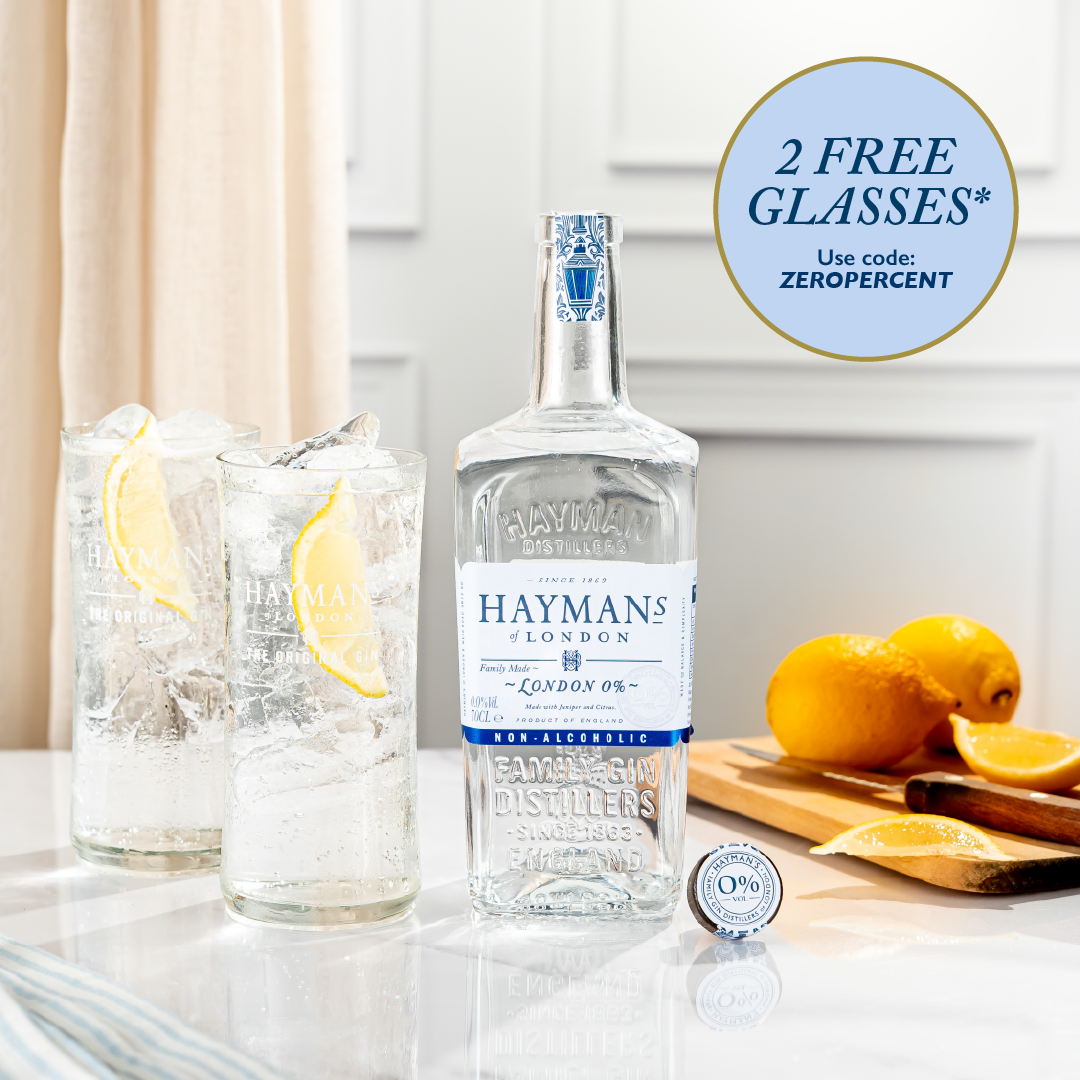
Launched in early January, Hayman’s London 0% lands at a time when no- and low-alcohol is shifting from a niche to a considered choice. The category is growing fast, yet the UK still has headroom compared to markets like Germany and Spain, particularly beyond beer and into spirits. While much of the no/low space has focused on older audiences and alcohol-free versions of big brands, younger and more mindful consumers are showing interest in flavour-led alternatives that still feel premium and intentional.
Hayman’s London 0% taps directly into that mindset: a naturally distilled, juniper-forward, citrus-led spirit made for proper alcohol-free serves that still feel like a gin and tonic, minus the alcohol. The real opportunity isn’t replacing alcohol; it’s reinventing the occasion. Through strategic paid Meta campaigns, TMC is helping Hayman’s reach conscious gin drinkers who still care about taste, craft and occasion. In fact, the ads have already driven 80% of purchases from the new product launch, helping the brand reach a wider audience actively interested in no- and low-alcohol spirits without compromising on flavour or ritual.
Dry January still matters, but with greater intent
Despite mindful drinking becoming a broader movement, Dry January remains a powerful driver of behaviour. According to Alcohol Change UK (2025), as many as 17.5 million people could take part in Dry January 2026, motivated by health, finances and wellbeing goals. Yet, beyond a short-term challenge, this signals a wider cultural shift aligned with values of moderation, wellness, and meaningful connection year-round.
Interestingly, some brands are now starting to push back against the all-or-nothing nature of Dry January, and doing so creatively. Recess, the functional beverage brand, has launched a new campaign that champions balance over abstinence. Centred around the message “You’re not broken. You don’t need a new you,” it repositions moderation as an act of self-care. The campaign spans out-of-home, influencer and social channels, including a standout New York Times ad timed to Quitters Day, when many people abandon their resolutions (Marketing Dive, 2026). It’s Instagram extension continues that narrative, blending humour with authenticity to connect with consumers tired of short-term restriction culture. For marketers, it's a smart example of tone: real, relatable, and resonant.
TMC perspective
In 2026, the most successful drinks brands won’t be those shouting the loudest about what they’ve removed, but those that understand what modern consumers are adding: intention, wellbeing and choice. But maybe the question isn’t how people do Dry January, but whether it even matters anymore.
As mindful drinking becomes a year-round mindset, perhaps we’re finally moving past the detox cycle altogether, poising a clear challenge for brands: can you make the mindful choice feel like the natural one?