
The Smartest Brands Aren’t Just Posting, They’re Replying
In modern digital marketing, social media is no longer a broadcast channel. It’s become a living, breathing ecosystem of participation.

Increasingly, brands are moving away from simply posting content and hoping it lands. Instead, they’re investing in conversations. As a result, we’re seeing a clear shift: brands are spending more time in the replies. This isn’t a subtle change. It’s a structural one. Social platforms are no longer static media channels, but cultural spaces where participation drives visibility.
At The Mind Collective, part of how we support our brands is through community management. This is exactly what it says on the tin: actively managing the brand’s community through replies, DM’s and real-time engagement. But the most interesting shift right now is this: the strongest brands aren’t just responding anymore, they’re starting conversations. Rather than waiting for engagement, they’re creating it.
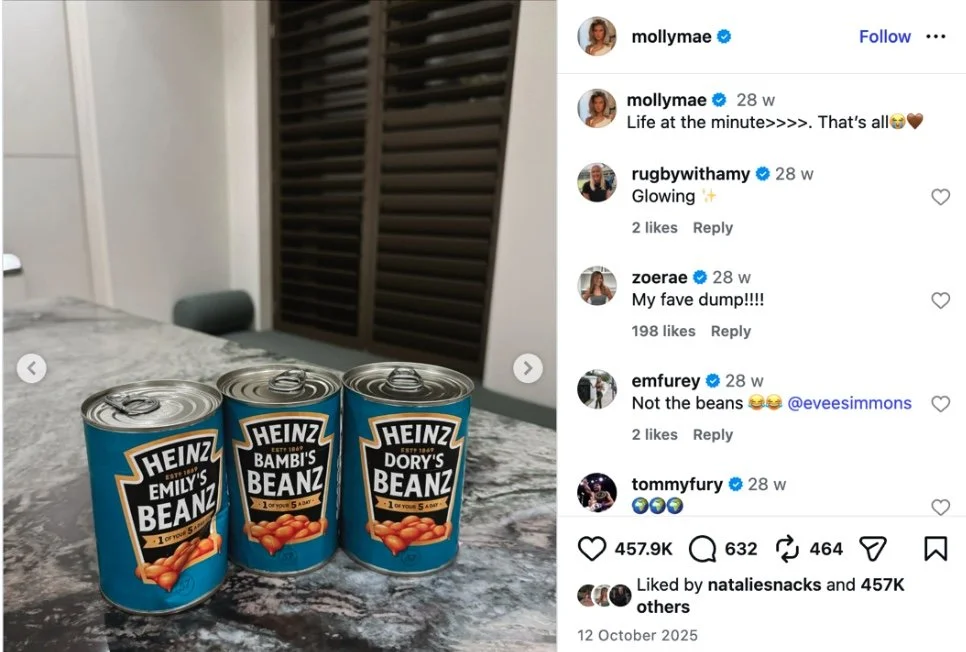
A good example of this transition can be seen across the food and drink space, where comment sections have become part of campaigns themselves. Think about Heinz, which has built a long-standing reputation for reactive, culturally aware social content, from playful replies to jumping into trending food debates across socials. Their tone feels less like a corporate brand and more like a participant in internet culture. A great example of this in action was when Heinz sent personalised Beanz cans to Molly-Mae Hague, which she shared with her audience online. A simple thing, but it demonstrates how the brand actively created culturally relevant touchpoints designed to travel beyond their own channels through creator amplification.
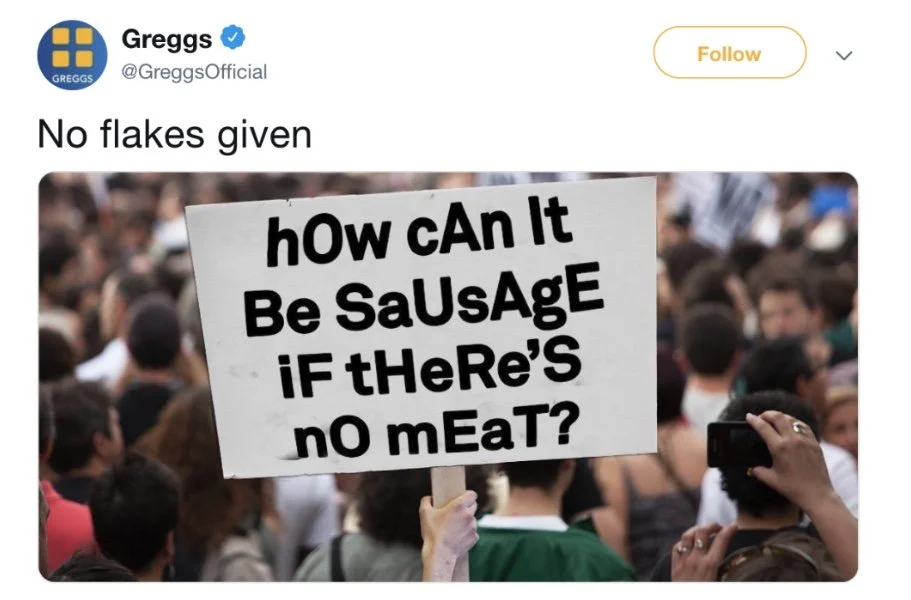
Or, there’s Greggs who consistently turn their social channels into a running joke with its community by replying to memes and leaning into humour that feels native to the internet rather than branded content.
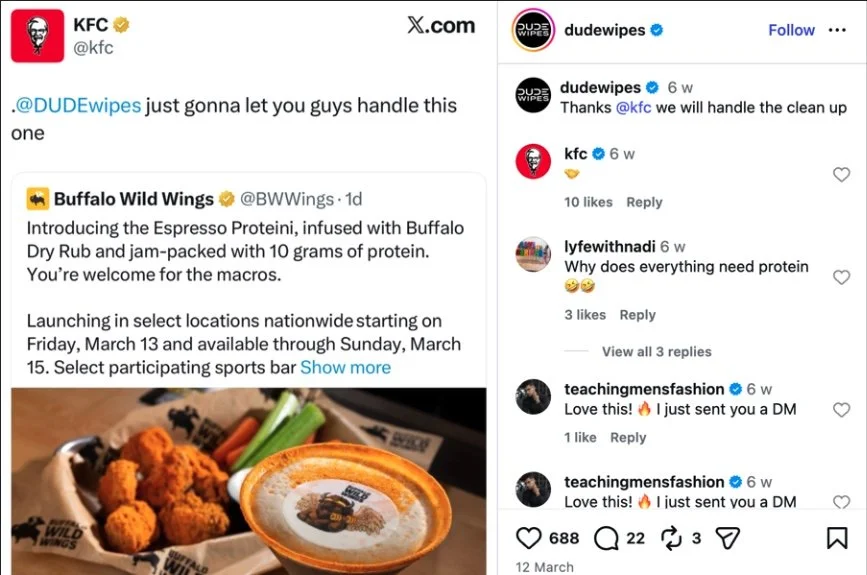
And this isn’t limited to the UK. Globally, soft drinks brand Olipop, made headlines after directly commenting on competitor conversations around influencer gifting and Super Bowl Campaigns, inserting themselves into the narrative rather than watching from the sidelines. Even fast-food brands like KFC and Taco Bell regularly engage in comment-led banter with creators and competitors, treating social feeds less like marketing channels and more like group chats.
Back in the 2010s, brand social was driven by humour, sarcasm and “clapback” culture (Modern Retail, 2026). Winning meant being the funniest account in the replies. But that era has evolved. Today, it’s less about reacting for attention and more about adding value to the conversation, whether that’s jumping in on trending conversations, congratulating consumers’ achievements, or tactically responding to competitor moments to shape the wider narrative. Even the traditional band “voice” has shifted. The best social teams now sound less like brands and more like real people who understand internet culture deeply enough to participate in it naturally.
A big reason for this change is audience behaviour. People don’t just consume content anymore, they explore it. “On platforms like X, Instagram and TikTok, people scroll straight to the replies looking for something interesting” said Ryan Meegan, CMO of Dude Wipes (Modern Retail, 2026). This shows how the comment section has become part of the experience, where tone is judged, authenticity is tested and where brand perception is formed. Dude Wipes is an example of a brand that has fully embraced this, actively engaging in comment sections across TikTok, Instagram, and X, often joining conversations with creators and brands. Their approach reflects a wider shift: comment engagement is no longer a reactive customer service, but a visibility strategy. As noted by Meegan, algorithmic changes have reinforced this shift, stating that “back-and-forth conversations, especially ones that feel unscripted, tend to travel further”.
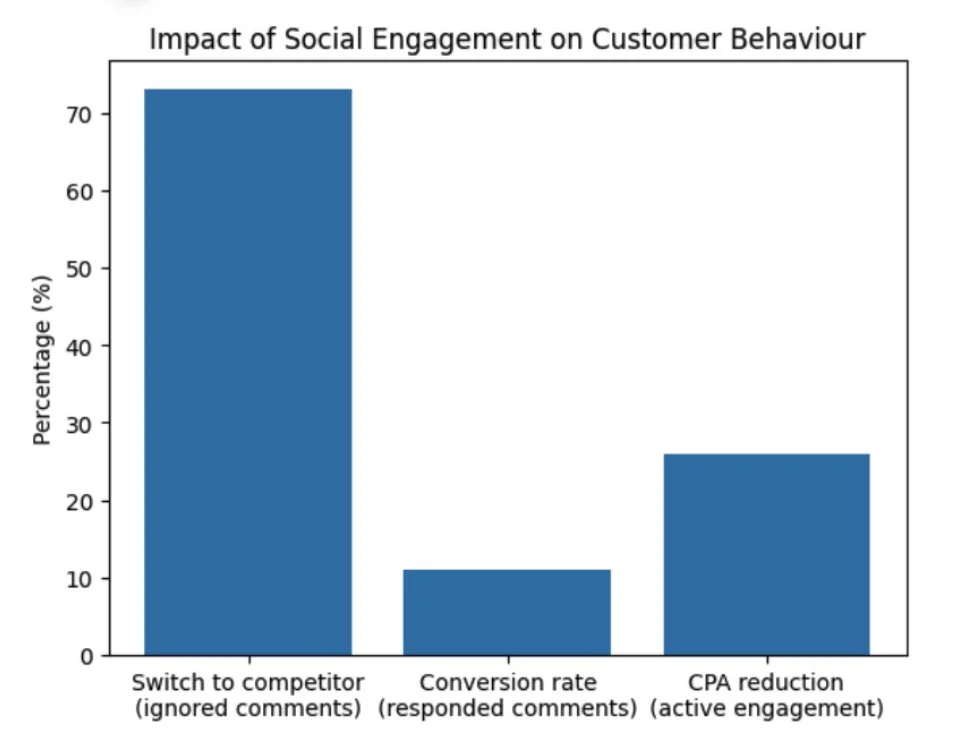
This isn’t just cultural. It’s commercial. Industry research from We Are Social Media (WERSM, 2025) highlights a clear gap: most brands still don’t consistently respond to comments, despite engagement being tied to visibility and conversations. The implications are significant. According to WERSM, 73% of users are more likely to purchase from a competitor if their comment is ignored, while responding to purchase-intent comments can drive an 11% conversion rate. Additionally, active engagement has been shown to reduce cost per acquisition by up to 26%! These stats clearly show how comment engagement is not just a reputational tactic, but a measurable performance driver.
More importantly, the nature of engagement itself is evolving. Today’s most effective brands are not merely responding to conversations; they are initiating them. As WERSM (2025) notes, leading brands are actively inserting themselves into trending topics, participating in audience-driven conversations and moving away from one-way broadcasting in favour of cultural participation. This shift reflects a broader truth about contemporary digital ecosystem: Attention is no longer captured through volume alone, but through relevance and participation.
The most effective brands today are no longer just responding to culture; they’re helping shape it. By jumping into trending topics and replying in real time, they’re building personality through conversation rather than content. This is especially visible in food and drink, where social platforms have become extensions of brand personality rather than campaign distribution channels.
The brands that win in this space aren’t necessarily the ones posting the most. They’re the ones talking the most; in the right places, at the right time, in the right tone, Because in today’s social landscape, attention isn’t just captured through content, it’s earned through conversation.