
Your PR Box Isn’t the Campaign Anymore (The Experience Is)
There was a time when influencer gifting worked simply because brands were doing it. Put a product in a branded box, send it to a creator, wait for the Instagram story, job done. That time has gone.
Today, creators receive PR packages constantly. Beauty creators openly joke about their overflowing “PR rooms”. Food influencers unbox the same launches every week. Lifestyle creators are becoming increasingly selective about what they even bother posting. The reality is harsh, but true: product alone is no longer enough to earn attention.
Create Something They’ll Remember
If your PR package doesn’t create an experience, it risks becoming background noise.
The smartest brands understand that modern influencer marketing is no longer just about sending products. It’s about designing moments people want to participate in, film, share and talk about. The product is still important, of course. But increasingly, the packaging, interaction and emotional response around it are doing just as much heavy lifting.
This is where brands often get it wrong. Too many PR strategies still focus entirely on aesthetics. They prioritise making boxes look “Instagrammable” without thinking about whether the experience itself is memorable. There’s a difference between something looking good and something creating engagement. One gets a quick Story upload, the other creates conversation.
At The Mind Colllective, this is something we think about constantly when building influencer and social campaigns. One example was our 2026 Lunar New Year campaign for Amoy, centred around the “Beat the Wok!” concept. Rather than simply sending creators noodles and sauces in a standard branded mailer, we built the campaign around participation. The idea was simple: creators were challenged to make a dish in under seven minutes, turning the PR package into a gamified experience rather than a passive gifting moment. To push this further, the PR package included a custom recipe card, created by TMC’s in-house creator), the creators could either follow or adapt (or make create their own take). Both recipes were made into social content, to visualise the content on the feed for creators and Amoy’s followers to see.
Gamification works because it gives creators something to do, not just something to show. It creates natural storytelling. Suddenly, the content isn’t “here’s what I received”, it becomes “can I complete this challenge?”. The creator becomes part of the campaign itself, rather than just a distribution channel for it. It’s a great UGC lever.
And importantly, it feels more native to how social platforms work today. TikTok, Instagram Reels and YouTube Shorts all reward participation-based content because audiences engage more with formats that feel active, reactive and experience-led. The best PR campaigns understand this shift and they’re built around interaction.
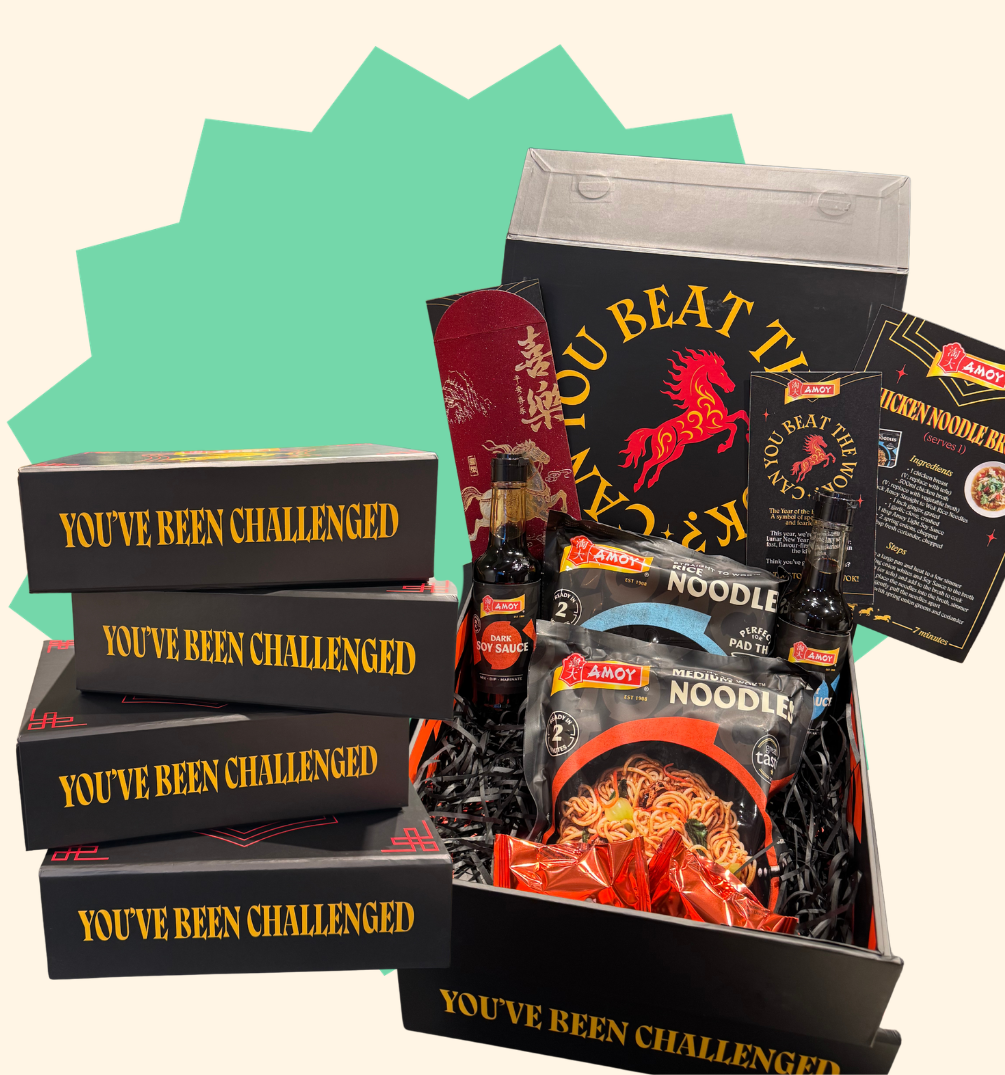
Our work on Amoy’s 'Beat The Wok' campaign generated standout social performance, driving 2.4M impressions, 8,334 engagements and +980 Instagram followers, while achieving an exceptional 10.7% average engagement rate, significantly outperforming typical industry benchmarks and reinforcing the power of experience-led creator campaigns.
Partnerships with culturally relevant creators such as @daigasikfaan further amplified reach, with her content alone generating over 250K impressions for the campaign. Each creator was also encouraged to challenge followers and other creators to Beat the Wok – another reach mechanism.
Luxury Brands are Taking Note
Luxury fashion brand Miu Miu recently demonstrated this brilliantly with the launch of its Fleur de Lait fragrance. Instead of placing the perfume in a traditional box, the product was presented inside kinetic sand designed to resemble ice cream. On paper, that sounds almost ridiculous. A perfume buried in sand? But strategically, it’s the perfect interactive campaign, which went viral!
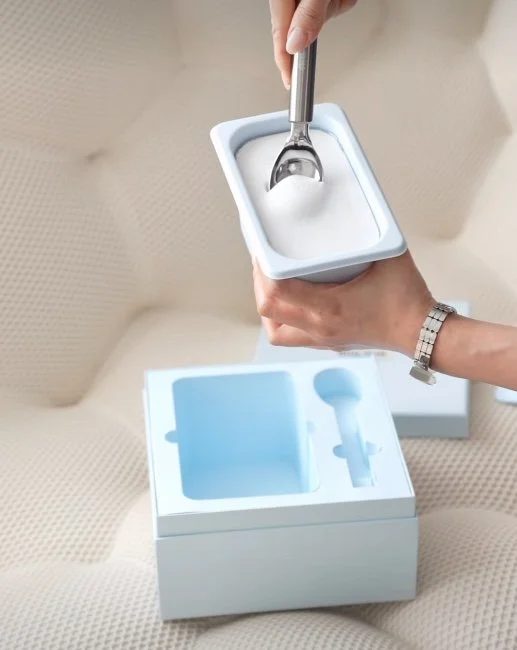
Fragrance is notoriously difficult to market as scent is inherently sensory. You can’t scroll past a post or ad and instantly understand how it smells, which means brands have to build atmosphere, texture and emotion visually instead. The unboxing became tactile, unexpected and sensory. Creators weren’t simply holding up a bottle to camera; they were digging through texture, interacting with the packaging and revealing the product in a way that felt playful and visually engaging. The packaging itself became content, which is the key difference.
It’s Not Just The Influencer You Should Impress
The strongest PR strategies today are no longer thinking purely about delivery, but when the box is opened. It's all about thinking theatre and participation. Social media has fundamentally changed the role of PR gifting. Historically, PR boxes were designed to impress the recipient. Now, they also need to entertain the influencers’ audience watching online. Those are two very different objectives.
We’ve entered an era where consumers are hyper-aware of marketing mechanics. People know when something is overly staged, excessively branded or designed purely for virality. That’s why the best experiential PR campaigns often balance spectacle with self-awareness. They lean into internet culture rather than trying to dominate it.
There’s also an honesty brands need to confront here: expensive doesn’t automatically mean effective.
Some of the most successful PR activations are clever because they’re conceptually strong, not because they cost the most money. A highly personalised note, an unexpected interaction or a culturally relevant challenge can outperform luxury packaging if it creates genuine engagement.
Generic gifting gets generic engagement
Personalisation, in particular, has become one of the most powerful tools in modern influencer marketing. Creators want to feel chosen, not mass-mailed. Consumers watching the content want to feel like the brand actually understands the person receiving it. That’s why tailored details, creator-specific references and campaign mechanics built around individual personalities and representation increasingly outperform generic luxury gifting. The shift is part of a much wider change happening across marketing more broadly. Audiences no longer just consume campaigns. They experience them, interact with them and remix them into culture.
PR boxes are no longer simply about sending products from point A to point B. They’re ‘content ecosystems’, made up of experience design to create social-first storytelling tools. Brands that fail to understand that risk spending thousands on beautifully packaged boxes that generate little more than a polite Instagram Story and a “thanks so much!”.
The brands winning right now are creating moments people actually want to talk about. The reality is simple: consumers don’t remember boxes, they remember how brands made them feel. In a social landscape oversaturated with products, the brands cutting through are the ones creating moments worth participating in. The future of PR isn’t louder packaging or bigger budgets, it’s smarter experiences. Because the campaigns people talk about are rarely the ones that simply looked expensive. They’re the ones that felt original, culturally aware and impossible not to share.